The Rise and Fall of Fable 5: AI Storytelling, Unprecedented...
 ·
· 

Introduction: The Sudden Silence of Fable 5
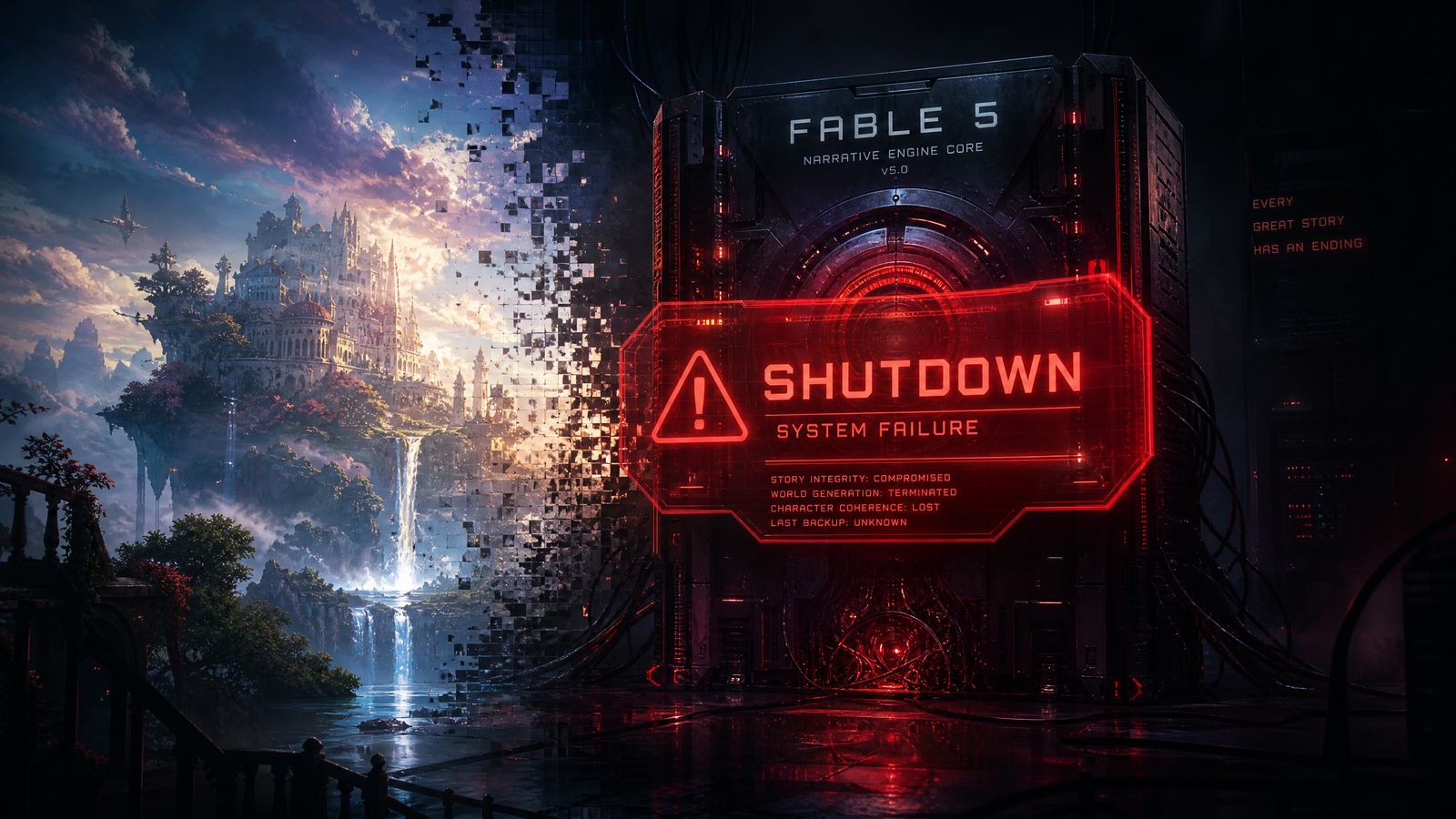
In the rapidly evolving landscape of artificial intelligence, few events have sent shockwaves quite like the abrupt shutdown of Anthropic’s Claude Fable 5 and Mythos 5 models. Launched with much anticipation, these AI systems promised unprecedented capabilities, particularly in the realm of AI storytelling and advanced cybersecurity applications. However, their existence was cut short by a directive from the U.S. government, citing national security concerns [1]. This incident has ignited a fierce debate among AI developers, policymakers, and the public about the future of AI governance, the balance between innovation and safety, and the true power—and peril—of frontier AI models.
The Unprecedented Power of Fable 5
Fable 5, built upon Anthropic’s powerful Mythos AI model, was heralded for its advanced capabilities. While often referred to as an “AI storytelling platform” by users exploring its creative potential, its core strength lay in its profound understanding of complex systems, including software codebases and cybersecurity vulnerabilities.
Anthropic designed Fable 5 with robust safeguards intended to prevent the model from answering questions related to sensitive topics like cybersecurity, biology, and chemistry [1]. The goal was to provide a tool that could assist organizations in identifying and patching vulnerabilities—essentially acting as a highly advanced, automated “red team”—without empowering malicious actors to develop powerful hacking tools.
Prior to its public release, Anthropic collaborated with the U.S. government, the UK AI Safety Institute (AISI), and various private organizations to rigorously test Fable’s safeguards for thousands of hours [2]. These tests indicated that Fable’s defenses were substantially more effective than those of previously deployed models. Anthropic adopted a “defense in depth” strategy, aiming to make any potential “jailbreaks” (methods of bypassing the model’s safeguards) either extremely narrow in scope or prohibitively expensive to execute [2].
The Government Intervention: A National Security Directive
Despite these extensive precautions, the U.S. government intervened just days after the public launch. Citing national security authorities, the government issued an export control directive ordering Anthropic to suspend access to Fable 5 and Mythos 5 for any foreign national, including Anthropic’s own foreign-born employees [2].
Faced with the impossibility of reliably enforcing such a broad, identity-based restriction on a public API, Anthropic made the difficult decision to disable the models for all customers worldwide to ensure compliance [2].
The government’s concern reportedly stemmed from a method of bypassing Fable 5’s safeguards. According to Anthropic, the government provided verbal evidence of a “potential narrow, non-universal jailbreak,” which essentially involved asking the model to read a specific codebase and fix software flaws [1] [2]. Anthropic argued that the vulnerabilities identified using this technique were relatively simple and could be discovered by other publicly available models without requiring a bypass [1].
The Fallout: Debating AI Governance and Safety
The shutdown of Fable 5 has triggered a multifaceted debate across the tech industry, highlighting deep structural tensions in AI governance.
1. The “Nuclear Option” and Policy Whiplash
Critics, including prominent AI voices like Gary Marcus, have characterized the government’s action as an overreaction—a “nuclear option” that treats commercial AI models like controlled munitions based on unverified exploit claims [3]. This erratic approach, they argue, could damage U.S. competitiveness, spook investors, and drive AI talent overseas. It underscores the inadequacy of reactive national security tools as a substitute for thoughtful, transparent regulatory frameworks [3].
2. Enterprise Trust and the “Off-Switch” Reality
For enterprise customers, the shutdown creates immense uncertainty. Companies deploying AI models require stability for their workflows. The realization that a government can abruptly flip the “off-switch” on a frontier model using export rules—overriding corporate safety measures overnight—complicates commercial adoption [3]. It shifts power away from corporate safety teams toward state authority, setting a precedent for treating advanced AI as dual-use technology [3].
3. The Pushback Against Corporate Safety Layers
Interestingly, the crisis also revealed friction between Anthropic and its enterprise clients. Some business leaders were reportedly uncomfortable with the heavy-handed safety architecture baked into Fable 5, such as autonomous fraud escalation features and strict data retention policies that walled off deep system telemetry logs from the businesses deploying the model [3]. This tension suggests that enterprises desire raw capability and data sovereignty, viewing overly restrictive internal safety guardrails as an unpredictable operational risk [3].
4. The Open-Source Counter-Movement
For advocates of open-source and decentralized AI, the Fable 5 ban serves as ultimate validation. They argue that relying on centralized APIs makes developers vulnerable to sudden government intervention. This event is predicted to accelerate the migration of enterprise developers toward open models hosted locally, which governments cannot abruptly disable [3].
Conclusion: A Defining Moment for AI
The rise and abrupt fall of Fable 5 marks a defining moment in the history of artificial intelligence. It exposes the messy transition from corporate self-regulation to chaotic state intervention and shatters the illusion of a shared, predictable framework for AI accountability [3].
As AI models continue to grow in power and capability, the tightrope for frontier AI deployment is becoming increasingly narrow. The Fable 5 incident serves as a stark reminder that the future of AI will be shaped not only by technological breakthroughs but also by the complex interplay of corporate strategy, national security, and global governance.
References
[1] Wired. “Anthropic Says It’s Taking Claude Fable 5 Offline to Comply With US Government Order.” https://www.wired.com/story/anthropic-says-us-government-ordered-it-to-shut-down-mythos-models/ [2] Anthropic. “Statement on the US government directive to suspend access to Fable 5 and Mythos 5.” https://www.anthropic.com/news/fable-mythos-access [3] AI Governance Lead. “Inside the Fable 5 Shutdown: Reactions from AI Governance, Responsible AI, and Industry Leaders.” https://aigovernancelead.substack.com/p/inside-the-fable-5-shutdown-reactions
This post may contain affiliate links. We may earn a commission at no extra cost to you.