Claude Code vs OpenAI Codex: Which AI Coding Agent Wins in 2026?
 ·
· 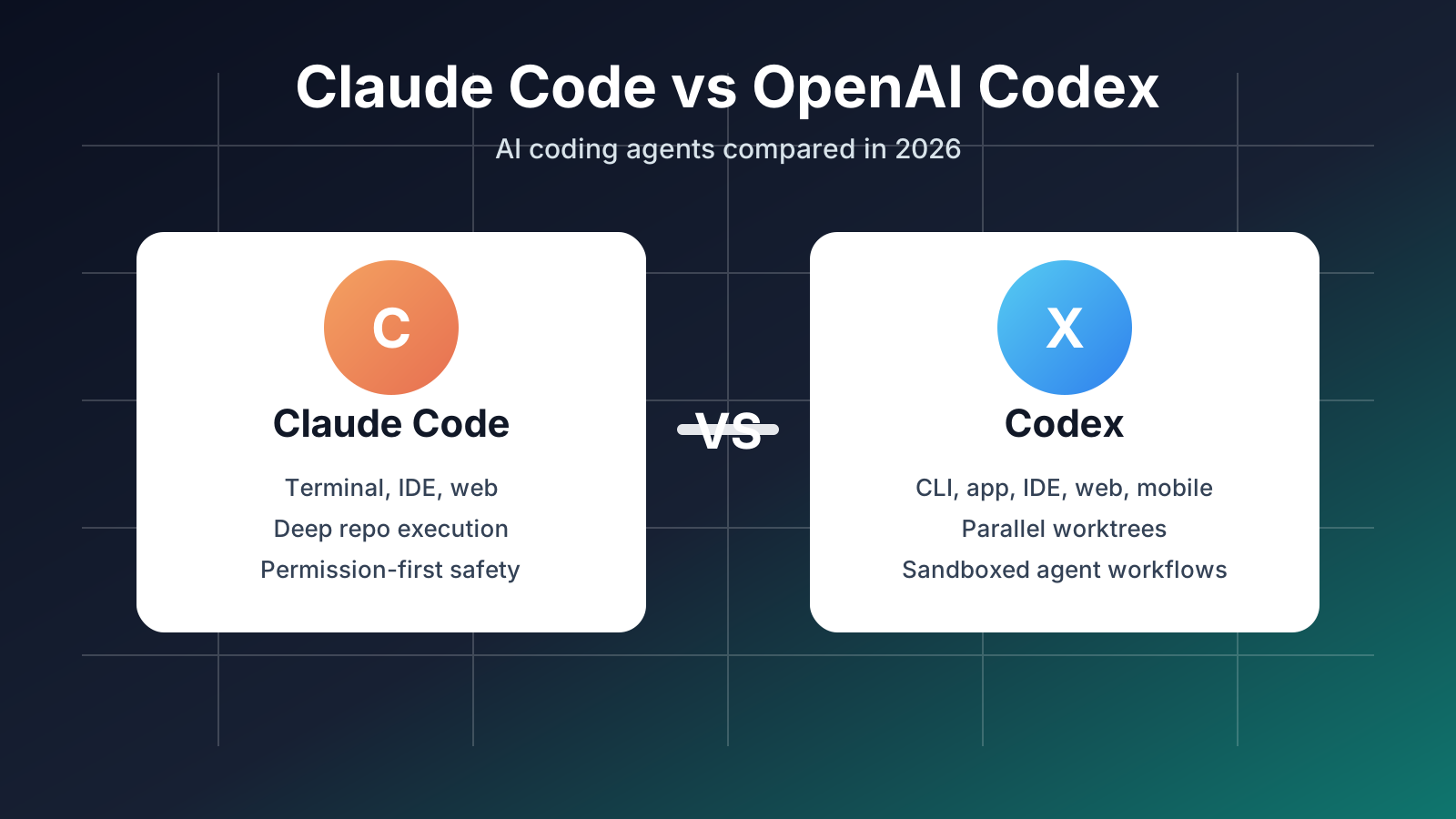
Claude Code vs Codex is quickly becoming the AI coding agent debate of 2026. A year ago, most developers were still comparing autocomplete tools. Today, the question is bigger: which agent can understand a real repository, make useful changes, run tests, respect permissions, and help a human ship faster without creating chaos?
The short answer is that both are serious, but they feel different. Claude Code is strongest when you want a focused engineering partner living close to the terminal, IDE, GitHub, GitLab, and your existing command line habits. Anthropic describes it as an agentic coding system that reads your codebase, changes files, runs tests, and delivers committed code. That matters because the work is not limited to writing a function. Claude Code is built for the messy middle of software: tracing dependencies, fixing failing CI, and handling multi-file refactors.
OpenAI Codex, meanwhile, is becoming less like a single coding assistant and more like a command center for many agents. OpenAI’s 2026 Codex app update brought a desktop experience for managing parallel agents, isolated worktrees, diffs, comments, skills, and automations. Then, on May 14, 2026, OpenAI announced Codex in the ChatGPT mobile app, so developers can review progress, approve commands, inspect diffs, and steer work from a phone. That is a big signal: Codex wants to follow the work wherever the developer is.
Where Claude Code Feels Ahead
Claude Code has a grounded, developer-native feel. It shines when the task is inside a codebase and the developer wants tight control. Anthropic has put a lot of emphasis on permissions, sandboxing, and approval flows. Its March 2026 engineering post on Claude Code auto mode is especially interesting because it admits a real product problem: users approve most permission prompts, so the tool needs smarter ways to reduce approval fatigue without removing guardrails.
That is exactly the right conversation for agentic coding in 2026. The risk is no longer that an AI writes awkward code. The risk is that it runs the wrong command, touches the wrong branch, leaks a secret, or confidently changes production-facing logic. Claude Code’s cautious default and its focus on existing developer tools make it attractive for teams that care about review discipline.
Where Codex Feels Ahead
Codex has the stronger ecosystem story. The desktop app, CLI, IDE extension, web workflow, mobile preview, skills, automations, and remote SSH support point toward a broader agent workspace. OpenAI’s April 2026 update, Codex for almost everything, also shows where the product is going: not just code generation, but computer use, app workflows, screenshots, frontend iteration, PR review, documents, and repeatable background tasks.
That breadth makes Codex compelling for founders, product teams, and developers who want one agentic layer across the software development lifecycle. If your day moves from GitHub to a browser to docs to a terminal, Codex is trying to reduce the context switching.
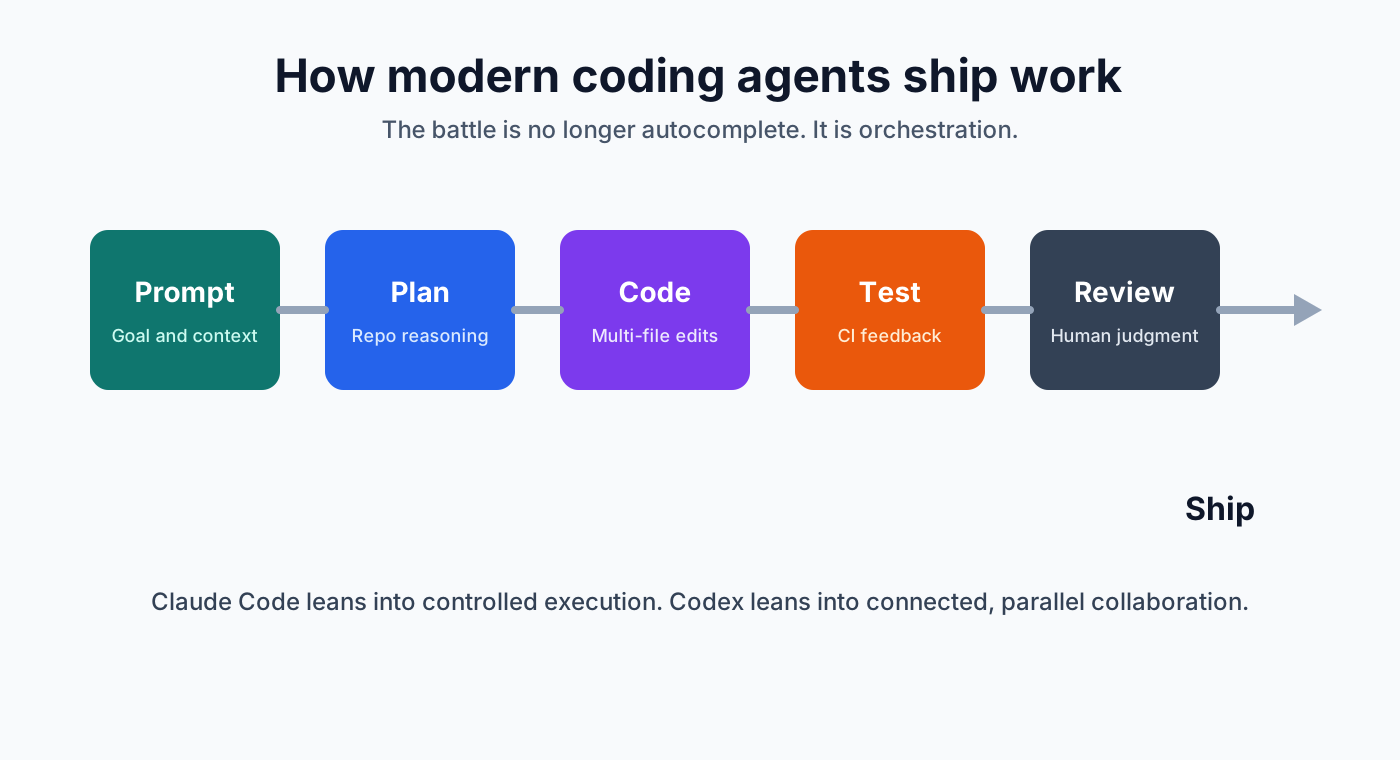
Claude Code vs Codex: The Practical Difference
Choose Claude Code if your priority is deep repository work with a familiar command-line rhythm. It is excellent for debugging, refactoring, test-driven fixes, and controlled engineering execution. It also feels especially suited to teams that want the agent close to the code and the human close to approvals.
Choose Codex if your priority is orchestration. It is better positioned for parallel tasks, cross-device supervision, reusable skills, automations, and workflows that spill beyond pure code. The mobile preview is not a gimmick; it reflects how long-running agent work actually happens. Sometimes the agent needs a quick answer while you are away from your desk.
The Verdict
The best AI coding agent in 2026 depends on your workflow. Claude Code is the sharper tool for controlled, codebase-first execution. Codex is the bigger workspace for parallel, connected, and increasingly mobile software work.
My honest take: Claude Code currently feels like the agent you trust inside a repo. Codex feels like the agent platform you build a new working style around. For solo developers, Codex may feel more expansive. For engineering teams with strict processes, Claude Code may feel more predictable. The winner is not the one that writes the most code. The winner is the one that helps you ship correct software with fewer dropped balls, clearer reviews, and less friction between idea and production.
This post may contain affiliate links. We may earn a commission at no extra cost to you.